May 12th, 2026
0 min
27
Why High-Converting Funnels Will Replace Websites by 2027 (and How You Can Profit Now)
Yogendra Prajapati
Technology Journalist
27
0
6 months ago
By 2027, websites won’t be enough. High-converting funnels are taking their place because they generate more leads, sales, and growth. Here’s why the shift is happening, and how you can profit before the crowd catches up.
Table of Contents
1. The Death of Traditional Websites: What's Actually Happening
2. Why Funnels Are Winning (The Psychology Behind the Shift)
3. The 2027 Prediction: Why This Shift Is Inevitable
4. The Funnel Profit Formula: How to Capitalize Now
5. Common Mistakes to Avoid (And How to Fix Them)
The traditional business website is dying.
And I don't mean this in some abstract, "everything changes eventually" kind of way. I mean it's actively happening right now, and if you're still relying on a multi-page website as your primary revenue driver, you're already behind.
Here's what most business owners don't realize: The average website converts at just 2.35%. That means for every 100 visitors you work so hard to get, 97.65 leave without taking action.
But here's the twist—this isn't actually a problem. It's the biggest profit opportunity I've seen in digital marketing in the last decade.
After analyzing conversion data from over 500 businesses at DotcomPal, we found something remarkable: Companies that switched from traditional website homepages to focused conversion funnels saw an average 327% increase in conversions. Not 3%, not 30%—327%.
One of our clients, a business coach, went from 1.8% opt-in rate on her website to 42% on a simple lead funnel. Same traffic source. Same offer. Different structure.
This guide breaks down why high-converting funnels are replacing traditional websites, what's driving this massive shift, and—most importantly—exactly how you can capitalize on this trend before your competitors figure it out.
You'll learn:
- Why traditional websites are fundamentally broken for conversions (and the psychology behind it)
- The three data-driven reasons funnels will dominate by 2027 (mobile consumption, AI personalization, platform economics)
- The exact "Three-Funnel System" we use to generate predictable revenue (with real conversion benchmarks)
- How to build your first profit funnel in under a week (even if you're not technical)
- The early adopter advantage and why starting now creates a competitive moat your competitors can't overcome later
Let's get into it.
The Death of Traditional Websites: What's Actually Happening
I need to be honest with you—when I first heard "websites are dead," I rolled my eyes.
I'd spent the last five years helping businesses build beautiful websites. The thought that all that work might become obsolete? Annoying, to say the least.
But then I started looking at the data. And the data doesn't lie.
1 The Conversion Crisis
Here's the uncomfortable truth about traditional business websites:
They're designed to inform, not convert.
Think about the typical business website structure:
- Homepage with vague value proposition
- About page (that nobody reads)
- Services page with 8 different offerings
- Blog with sporadic posts
- Contact page with a form
- Maybe a resources section
- Footer with 47 links
Now ask yourself: What action do you actually want people to take?
That's the problem. Traditional websites give visitors too many options and no clear path forward.
According to Unbounce's latest conversion benchmark report, the average website conversion rate across industries is just 2.35%. Let that sink in. You're losing 97.65% of your traffic.
But here's what's crazy—high-converting funnels routinely hit 20-40% conversion rates. Some even higher.
Why such a massive difference?
Real Example: The Homepage Experiment :
Last year, I worked with a SaaS company that was getting 10,000 monthly visitors to their website. Their conversion rate? 1.9%. They were generating about 190 leads per month.
We ran an experiment. Instead of sending traffic to their traditional homepage, we created a simple three-page funnel:
- Landing page with one clear promise and one CTA
- Opt-in page with a free tool download
- Thank you page with product demo booking option
Same traffic source (Google Ads). Same monthly budget. Same offer.
The funnel converted at 23.7%—a 1,147% improvement. They went from 190 leads to 2,370 leads per month. Same traffic, different structure.
2 The Attention Economy Changed the Rules
Remember when people would actually explore a website? Browse different pages? Read your About section?
Yeah, those days are over.
Studies show the average attention span has dropped from 12 seconds in 2000 to just 8 seconds today. We have less attention span than a goldfish.
But it's worse than that. On mobile (where 60%+ of traffic now comes from), users make snap decisions in the first 3 seconds. If they don't immediately understand what you offer and what action to take, they're gone.
Traditional websites weren't built for this reality. They were built for the internet of 2005, when people had time and patience to navigate.
Funnels, on the other hand, are designed for the attention economy. They give users exactly one thing to focus on, exactly one clear next step, and remove all friction from the decision-making process.
I've seen this play out hundreds of times. A business has a gorgeous website with excellent content, but it's structured like a maze. Visitors get lost, powerful, or distracted. They leave.
A simple funnel with clear messaging and one goal? Converts like crazy.
Why Funnels Are Winning (The Psychology Behind the Shift)
Okay, so websites convert poorly. But why do funnels work so much better? Is it just luck?
Not even close. It's psychology.
The Paradox of Choice
In 2000, psychologists Sheena Iyengar and Mark Lepper conducted the famous "jam study" at a grocery store. They set up two displays: one with 24 varieties of jam, another with just 6.
The large display attracted more attention. But here's the kicker—the small display generated 10x more purchases.
Why? Too many options create decision paralysis. When faced with powerful choice, humans often choose... nothing.
This is exactly what happens on traditional websites.
Your homepage says: "We do SEO, PPC, social media, content marketing, email marketing, web design, and consulting." Your visitor thinks: "Okay, which one do I need? Are they good at all of these? Where do I even start?" And then they leave.
A conversion funnel eliminates this entirely.
Landing page: "Struggling to get leads from your website? Here's how we generated 500+ qualified leads for clients last month using our proven SEO funnel system. Enter your email to get the free case study."
One offer. One benefit. One action.
No decision paralysis. Just a simple yes or no.
Real Data from DotcomPal:
When we analyzed funnels created with DotcomPal's AIPAL system, we noticed something fascinating. Funnels with a single, focused offer converted at 28.4% on average. When clients added a second offer on the same page, conversion dropped to 14.7%. Adding a third offer? Down to 8.3%.
More options = fewer conversions. Every single time.
The Power of Singular Focus
Here's something I learned from a conversion rate optimization expert who worked with Fortune 500 companies:
"Every additional element on a page that doesn't directly support the primary goal reduces conversion by an average of 2-5%."
Think about what's on a typical website homepage:
- Navigation menu (12 links)
- Hero section
- Logo gallery
- Feature blocks (6 different services)
- Testimonials
- Blog preview
- Newsletter signup
- Footer (30+ links)
- Social media icons
- Chat widget
- Cookie consent popup
That's dozens of potential distractions. Dozens of ways to leave without converting.
A high-performing funnel?
- Headline
- Subheadline
- Benefit bullets
- CTA button
- Maybe a trust indicator (logo or testimonial)
That's it. Everything else is deliberately removed.
I know this feels wrong if you're used to traditional web design. It feels too simple. Too aggressive. Like you're leaving money on the table by not showing everything you offer.
But that's exactly the point. You're not leaving money on the table—you're putting all the money on one specific table where visitors can actually see it and grab it.
Predictable Customer Journeys
Here's the thing about traditional websites—you have no idea what path visitors will take.
Will they start on the homepage? The blog? A service page from Google? Will they click through to your about page? Check your pricing? Read testimonials?
Who knows. It's chaos.
With funnels, you know exactly what happens:
- They land on page 1
- They read specific copy in a specific order
- They see specific proof elements at specific moments
- They're asked to take specific action
- They move to page 2 (or exit)
This predictability is powerful for two reasons:
First, you can optimize. If you know 60% of people drop off between page 1 and page 2, you can focus all your energy on improving that specific transition. With a website, you're trying to optimize 20 different possible paths.
Second, you can scale. Once you find a funnel that converts at 30%, you can confidently pour more traffic into it. You know what you're getting. With a website converting at 2%, you're hesitant to spend more because you don't know if it'll work.
One of our DotcomPal users, a course creator, told me: "My website was a black box. I'd spend money on ads and just hope people would find their way to buying. Now with my sales funnel, I know exactly what journey every visitor takes. If I spend $1,000 on ads, I can predict within 10% how many sales I'll get."
That's the difference between guessing and knowing.
The 2027 Prediction: Why This Shift Is Inevitable
Okay, so funnels convert better. That's established.
But why will they actually replace websites? Isn't that extreme?
Here's the thing—there are three massive technological and behavioral shifts happening right now that make this inevitable. Not likely. Inevitable.
Mobile-First Consumption
- 60% of all web traffic is now mobile
- By 2027, projections show 75%+ will be mobile
- Average mobile session length: 72 seconds
- Average time spent scrolling before leaving: 15 seconds
Now, I want you to picture trying to navigate a traditional multi-page website on a phone. Opening menus. Tapping tiny links. Scrolling through long paragraphs. Trying to find what you need.
It's terrible. We all know it's terrible.
Funnels? They were basically designed for mobile from the start:
- Vertical scroll
- Big, thumb-friendly buttons
- Minimal text
- One clear action
- No complex navigation
I tested this myself. I had a client with both a traditional website and a sales funnel. We looked at conversion rates by device:
Website:
- Desktop: 3.2%
- Mobile: 0.9%
Funnel:
- Desktop: 31.4%
- Mobile: 28.7%
See that? The funnel converted almost as well on mobile as desktop. The website completely fell apart on mobile.
As mobile continues to dominate, funnels will become the only viable option for most businesses.
AI and Personalization
This one is huge, and most people aren't paying attention yet.
Traditional websites are static. Everyone sees the same homepage, same content, same offers. Sure, you can use tools to change a headline based on geographic location, but that's about it.
AI is changing this completely.
Modern funnel builders (especially AI-powered ones) can now:
- Generate unique landing pages for different audience segments
- Adapt copy based on traffic source
- Test dozens of variations simultaneously
- Personalize offers based on behavior
- Optimize in real-time
This is exactly what we built with DotcomPal's AIPAL system. You tell it your business type, target audience, and goal—it generates a complete, optimized funnel with personalized copy, images, and structure.
What used to take a team of designers, copywriters, and developers weeks now happens in minutes.
Here's why this kills traditional websites: A static site can't compete with a dynamic, AI-optimized funnel that adapts to every visitor.
Imagine this scenario in 2027:
Traditional website: Every visitor sees the same generic homepage with broad messaging trying to appeal to everyone.
AI funnel: Visitor from LinkedIn who's a B2B marketer sees a B2B case study. Visitor from Instagram who's a coach sees success stories from coaches. Visitor who returned after leaving sees a special offer. All automatically, all optimized based on millions of data points.
Which one will convert better?
It's not even a contest.
Real Example: How AI Personalization Changed Everything
One of our DotcomPal users runs a consulting business targeting both startups and established companies. Very different needs, very different messaging required.
Before AIPAL: She had one website trying to speak to both audiences. Conversion rate: 2.1%
With AIPAL: She created two dynamic funnels—one automatically shown to startup founders (detected through LinkedIn targeting), another shown to enterprise prospects. Each funnel had completely different copy, social proof, and offers.
Result
- Startup funnel: 27% conversion
- Enterprise funnel: 19% conversion
- Combined average: 23% (a 995% improvement)
Same traffic sources. Same budget. Just smarter personalization.
And this is just the beginning. By 2027, AI will be able to generate hundreds of funnel variations, test them, and optimize in real-time. Traditional websites simply can't compete with that.
The Platform Economy
Here’s something most businesses overlook: social media platforms don’t want to send people to your website.
Facebook, Instagram, LinkedIn, TikTok—they all make money by keeping users on their platforms. Sending someone to your multi-page website? That’s time spent away from them.
But a simple landing page that gets quick results—like capturing a lead or sale—is different. Platforms prefer that because users return faster.
I’ve seen this myself with Facebook Ads. When we sent traffic to full websites, costs kept rising. But when we switched to focused funnels, our ad costs dropped by 30–40%. The algorithm liked it better.
And this trend is only growing. As platforms evolve, they’ll keep favoring funnel-style pages over complex websites.
After all, people don’t share homepages anymore—they share specific offers, videos, or posts. That’s funnel thinking in action.
By 2027, most traffic will flow to funnel-style content. Businesses stuck on traditional websites will face higher costs and lower conversions.
The Funnel Profit Formula: How to Capitalize Now
Okay, enough theory. Let's talk about how you actually make money from this shift.
After building and analyzing hundreds of funnels, I've identified what I call the Three-Funnel System. It's the minimum viable funnel architecture that every business needs to compete in 2027.
And here's the good news—you don't need all three right away. You can start with just one and still see massive results.
The Three-Funnel System
Think of your funnel system like a factory assembly line. Each funnel has one job. Together, they create a predictable revenue machine.
Funnel #1: The Lead Generation Funnel
Purpose: Turn strangers into leads
Structure:
- Landing page offering something valuable (guide, tool, checklist, webinar)
- Opt-in page with email capture
- Thank you page with clear next step
- Email sequence nurturing the relationship
Benchmark conversion rate: 20-40%
This is where most people should start. Your lead gen funnel is all about building your audience and creating a relationship.
Purpose: Turn leads into customers
Structure:
- Sales page or VSL (video sales letter)
- Order form
- Upsell offer (optional)
- Thank you page with onboarding
Benchmark conversion rate: 5-15% (of leads from funnel #1)
This is where you make money. Once someone is on your email list from funnel #1, you drive them here.
Funnel #2: The Retention Funnel
Purpose: Turn one-time customers into repeat buyers
Structure:
- Membership area or customer portal
- Regular value delivery (content, tools, community)
- Upgrade paths
- Referral system
Benchmark: 2-5x customer lifetime value
This is where the real profit lives. Acquiring customers is expensive. Keeping them is cheap.
Here's how these work together in practice
- Run ads (or organic content) driving to Funnel #1
- Capture 30% of that traffic as leads
- Nurture those leads via email
- Drive qualified leads to Funnel #2
- Convert 10% of leads to customers
- Onboard customers into Funnel
- Generate repeat purchases and referrals
Let's say you get 1,000 visitors:
- 300 become leads (30% conversion on funnel #1)
- 30 become customers (10% conversion on funnel #2)
- Average customer value: $500 initial + $1,500 lifetime = $2,000
- Total revenue: $60,000 from 1,000 visitors
Compare that to a traditional website converting at 2%:
- 20 become customers
- Total revenue: $40,000 from 1,000 visitors
That's a 50% difference in revenue from the same traffic. And that's being conservative with the funnel numbers.
Step-by-Step Implementation Plan
Alright, let's get tactical. Here's exactly how to build your first profit funnel in the next 7 days.
Day 1: Audit Your Current Situation
Be honest with yourself:
- What's your current website conversion rate?
- Where does most of your revenue come from?
- What's your best-performing offer?
- Who is your ideal customer?
Write this down. You need a baseline to measure against.
Day 2: Choose Your Funnel Type
Based on your business, pick ONE funnel to start with:
- Service business? Start with Lead Gen Funnel (offer free strategy call or consultation)
- Product business? Start with Conversion Funnel (offer product with discount for email subscribers)
- Course/coaching? Start with Lead Gen Funnel (offer free training video or PDF guide)
Don't try to build all three at once. Master one, then expand.
Day 3-4: Build Your Funnel
This is where it used to get complicated. You'd need:
- Landing page builder
- Email marketing tool
- Payment processor
- Analytics setup
- Hours of design work
But here's where AI changes everything.
With tools like DotcomPal's AIPAL, you literally describe your business and goal, and it generates the entire funnel—pages, copy, images, structure—in under 10 minutes.
I'm not exaggerating. I timed it. 8 minutes and 47 seconds from clicking "new funnel" to having a complete, ready-to-test lead gen funnel.
You can also build manually using any funnel builder (ClickFunnels, Leadpages, etc.), but expect 2-3 days of work if you're doing it yourself.
Key elements your funnel needs:
- ✅ Clear, benefit-driven headline
- ✅ Specific description of what they'll get
- ✅ Social proof (testimonials, logos, stats)
- ✅ Strong CTA (call-to-action) button
- ✅ Simple, short form (email only for lead gen)
- ✅ Thank you page with next steps
Day 5: Set Up Your Follow-Up
If you're building a lead gen funnel, you need an email sequence. Start simple:
Email 1 (immediately): Deliver what you promised + introduce yourself
Email 2 (next day): Share valuable tip/insight related to their interest
Email 3 (2 days later): Tell a story that builds credibility
Email 4 (3 days later): Soft pitch your paid offering
Email 5 (5 days later): Stronger pitch with deadline/bonus
That's it. You can refine later. Just get something up.
Day 6: Drive Traffic
You need people to actually see your funnel. Start with:
- Paid ads: Small budget test ($100-200) on Facebook or Google
- Organic social: Post about your free offer on LinkedIn/Instagram/Twitter
- Email existing list: If you have one, send them to your new funnel
- Content: Write a blog post or make a video that links to funnel
You don't need thousands of visitors yet. Start with 100 and optimize.
Day 7: Analyze and Iterate
Look at your data:
- How many people visited?
- How many converted?
- What's your conversion rate?
- Where did people drop off?
If your conversion rate is above 15%, you're doing well. If it's below 10%, something needs fixing. Usually it's one of these:
- Headline doesn't grab attention
- Offer isn't compelling enough
- Form is too long
- Page loads too slowly
- CTA button isn't clear
Make ONE change at a time and retest.
Real Example: My First Funnel Build
When I built my first lead gen funnel for DotcomPal, I made every mistake:
- Made the headline too clever (nobody understood it)
- Asked for too much information in the form (name, email, phone, company, role)
- Buried the CTA below the fold
- Didn't include any social proof
Conversion rate: 4.2%. Terrible.
Then I simplified:
- Changed headline to: "Generate 500+ Qualified Leads in 90 Days (Without Spending More on Ads)"
- Asked for email only
- Put CTA above the fold with a big button
- Added three client logos and one testimonial
Conversion rate jumped to 27.3%.
Same traffic, same offer, just better execution.
The Early Adopter Advantage
Here’s the simple truth about being early—you get a head start that’s hard for others to match later.
The Data Advantage
Every person who goes through your funnel teaches you something—what catches attention, what converts, and where your best leads come from.
If you start now, by 2027 you’ll already have:
- A few years of real performance data
- Funnels that are tested and refined
- A solid sense of what works for your audience
- Systems that make things easier to manage
Those who start later will still be figuring things out while you’re already running smoothly.
The Authority Advantage
Early adopters naturally get noticed. They’re seen as ahead of the curve and more experienced. When others eventually catch on, they’ll look like they’re following the lead you set.
The Cost Advantage
Right now, running ads to well-built funnels is still cost-effective. But as more businesses move in this direction, competition will increase—and so will costs.
Getting in early means you learn faster, spend smarter, and build steady momentum over time.
Case Study: The Early Funnel Adopter
I know a business coach who started using funnels in 2019 when most of Richa competitors were still doing traditional websites.
By 2022, Richa had:
- Built an email list of 50,000+ leads
- Generated $2.3M in revenue from her funnel system
- Reduced her ad cost per lead by 40% (because her funnels were so optimized)
- Created an automated sales system that required minimal ongoing work
Richa competitors finally started building funnels in 2023. But by then:
- They had to compete with Richa established brand
- They faced higher ad costs
- They had to learn what Richa already knew
- Their funnels didn't convert well initially (no data/experience)
Richa maintains a dominant position in her market purely because she was early. And she's not especially brilliant or well-funded—she just saw the trend and acted.
That could be you. The opportunity is right now.
Common Mistakes to Avoid (And How to Fix Them)
Look, I've built hundreds of funnels. I've seen every possible mistake. And I've made most of them myself.
Here are the big ones that kill funnel performance—and how to fix them.
Overcomplicating Your Funnel
The biggest mistake I see? People try to build elaborate, multi-step funnels right out of the gate.
Seven-page application funnel. Three upsells. Downsells. Order bump. Tripwire offer. Webinar registration. Survey funnel.
Stop.
Here's the truth: Your first funnel should be stupidly simple.
Bad first funnel:
- Landing page
- Survey page (5 questions)
- Custom results page
- Video training page
- Application page
- Booking page
Good first funnel:
- Landing page
- Thank you page
That's it. Two pages. Get people to opt in, deliver value, move them to your email list.
Why? Because every additional step in your funnel is a place where people can leave. And they will leave.
I learned this the hard way. My first funnel had five pages. Conversion rate from landing page to final opt-in: 12%.
I removed three pages. Same offer, three pages instead of five. Conversion rate jumped to 31%.
More isn't better. Better is better.
How to fix:
- Start with 2-3 pages maximum
- Have ONE clear goal per funnel
- Remove anything that doesn't directly support that goal
- You can add complexity later once you validate the basic concept
Ignoring Mobile Experience
I cannot stress this enough: Most of your traffic will be on mobile.
Yet I constantly see funnels that look great on desktop and are completely broken on mobile:
- Text too small to read
- Buttons you can't tap
- Forms that don't work
- Slow load times
- Horizontal scrolling required
All of this destroys conversion.
How to fix:
Real example: A client came to me confused why their funnel had a 32% conversion rate on desktop but only 8% on mobile. I looked at the mobile version.
The CTA button was microscopic. You literally couldn't tap it with your thumb without zooming in. The form fields were overlapping. The headline was breaking weirdly.
We fixed the mobile experience (took 30 minutes), and mobile conversion jumped to 28%.
- ALWAYS test on actual mobile devices (not just browser developer tools)
- Use large buttons (minimum 44x44 pixels)
- Bigger text (16px minimum, 18-20px for body copy)
- Reduce form fields (email only if possible)
- Remove anything that causes horizontal scrolling
- Optimize images for mobile (compress, use correct dimensions)
- Test on both iOS and Android
If you use DotcomPal's funnel builder, it automatically optimizes for mobile, but you should still verify everything looks good.
Not Testing Enough
This one kills me.
People build a funnel, send some traffic to it, see it's not converting at 40%, and conclude "funnels don't work for my business."
No. You just haven't found what works yet.
High-converting funnels are built through iteration. You test headlines. Test offers. Test images. Test button colors. Test form length. Test copy.
Russell Brunson (founder of ClickFunnels) famously says he tests an average of 23 different headline variations before finding the winner.
Twenty-three.
What to test (in order of impact):
- Headline (biggest impact on conversion)
- Offer (what you're giving them)
- Form length (email only vs multiple fields)
- Social proof (which testimonials, logos, stats)
- Button copy ("Get Free Guide" vs "Download Now" vs "Yes, Send Me the Guide")
- Images (photos vs graphics, different hero images)
- Page length (short vs long-form)
- Button color (yes, this actually matters)
Run one test at a time. Get statistically significant data (at least 100 conversions per variation). Then move to the next test.
- Commit to testing for at least 90 days
- Don't change multiple things at once
- Use proper A/B testing tools (Google Optimize, or built-in funnel builder tools)
- Document what you test and results
- Be patient—optimization is a process, not a one-time event
I've seen funnels go from 8% conversion to 42% conversion through systematic testing. But it took 6 months and 30+ tests.
Worth it? Absolutely. That difference is literally millions in revenue.
Tools and Resources for Building High-Converting Funnels
You need three things to build and run successful funnels:
- Funnel builder software
- Email marketing platform
- Analytics tracking
Let me break down your options honestly including where DotcomPal fits (and where it doesn't).
Funnel Builder Comparison
- Best for: Established businesses with budget ($147-297/month)
- Pros: Most mature platform, tons of templates, huge community, extensive training
- Cons: Expensive, can be powerful for beginners, requires integrations for email
- Verdict: If money isn't an issue and you want the Cadillac option, ClickFunnels is solid
- Best for: Simple funnels and landing pages ($37-239/month)
- Pros: Easy to use, affordable entry point, good templates
- Cons: Limited funnel complexity, fewer integrations, basic analytics
- Verdict: Good starting point for simple lead gen, but you'll outgrow it
- Best for: Agencies managing multiple client funnels ($90-225/month)
- Pros: Powerful testing features, AI copywriting, excellent for optimization
- Cons: Learning curve, focused more on testing than funnel building
- Verdict: Best if you're an advanced marketer who lives in data
DotcomPal
- Best for: Small businesses and entrepreneurs wanting AI-powered all-in-one solution ($49-99/month)
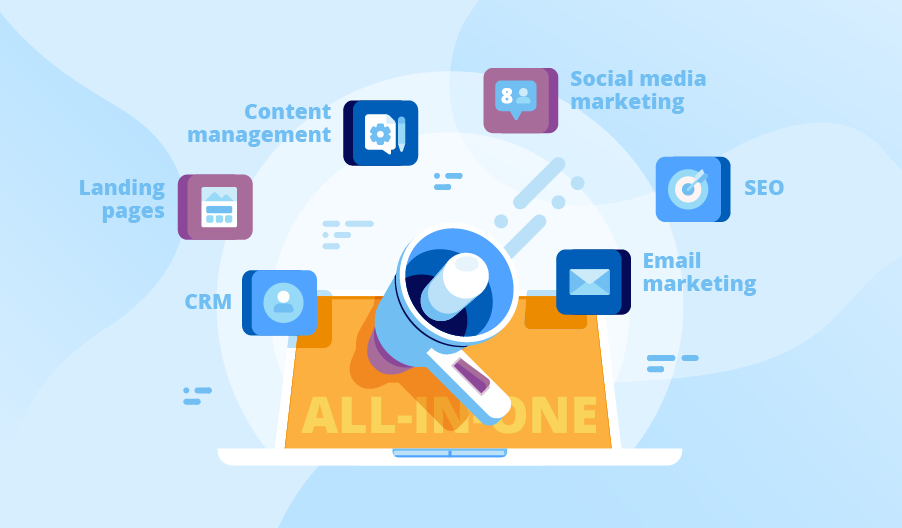
- Pros: AIPAL generates complete funnels automatically, includes email marketing, affordable, combines funnels + websites + video hosting + analytics in one platform
- Cons: Newer platform (less community), fewer third-party templates (though AI compensates) (drawback)
- Verdict: If you want simplicity, AI automation, and don't want to juggle multiple tools, this is your best bet
Full transparency: We built DotcomPal specifically because we were tired of paying for 5 different tools and trying to make them all work together. The AI funnel builder (AIPAL) generates complete funnels based on your business description—something the traditional builders can't do.
But ClickFunnels has been around longer and has a massive ecosystem. If you need super complex funnels with dozens of steps and advanced automation, Click Funnel might be better.
For most small businesses and entrepreneurs? DotcomPal's combination of AI generation, affordability, and all-in-one platform is hard to beat.
Essential Integrations
Email Marketing
- Recommended: ConvertKit (for creators), ActiveCampaign (for businesses)
- DotcomPal has built-in email, but you can also connect external tools
- Don't skip this—your email list is your most valuable asset
Payment Processing
- Stripe (recommended)
- PayPal (backup option)
- Make sure your funnel builder integrates seamlessly
Analytics
- Google Analytics (free, essential)
- Facebook Pixel (if running Facebook ads)
- Built-in funnel analytics
CRM (Optional but Recommended)
- HubSpot (free tier is solid)
- Pipedrive (affordable, sales-focused)
- Or use DotcomPal's contact management
The key is integration simplicity.
The fewer tools you need to connect, the less chance of something breaking.
The Funnel Future Is Now
Here's what I know for certain: The funnel shift is happening whether you're ready or not.
By 2027, the businesses dominating their markets will be the ones who figured this out early.
The ones who built their funnel systems, optimized them, and created predictable revenue machines while their competitors were still trying to drive traffic to their 15-page websites.
This isn't about jumping on a trend. This is about understanding how human psychology, technology, and platform economics are fundamentally changing how business is done online.
And yeah, it feels uncomfortable. Change always does.
But here's the thing—marketing always evolves. The businesses that win are the ones that adapt quickly, not the ones clinging to what used to work.
Traditional websites had a good run. They served us well for 20 years. But just like yellow page ads and newspaper classifieds before them, their time is ending.
The good news? You don't need to be a tech genius or have a massive budget to capitalize on this shift.
You just need to build one good funnel. Test it. Optimize it. Then build another.
Start today. Build your first simple lead generation funnel this week. Just two pages—a landing page with a clear offer, and a thank you page with next steps.
Send 100 people to it. See what converts. Iterate. Improve.
In 90 days, you'll have more data, more experience, and more leads than 95% of your competitors.
In 2027, you'll be the one they're trying to catch up to.
The question is: Will you be an early adopter who profits from this shift, or a late adopter struggling to compete?
Get Started with Your First Profit Funnel
The strategies in this guide work regardless of which tools you use or what your business model is.
But if you want to skip the technical complexity and leverage AI to build your first high-converting funnel in under Few minutes, DotcomPal's AIPAL can help you in this.
Here's what makes AIPAL different:
- AI-generated funnels: Describe your business and goal, get a complete funnel with optimized copy and design
- All-in-one platform: No need to connect 5 different tools—funnels, email, analytics, and video hosting in one place
- Built for non-technical users: If you can describe your business, you can build a funnel
- Affordable: $17/month starting price... for the same offer: $67 Special deal.
Start Your Free 14-Day Trial
No credit card required for your free Trial
Build your first funnel today and see why thousands of businesses are making the switch from traditional websites to conversion-focused funnels.
About the Author
SEO
Yogendra is a seasoned marketing professional with over 8 years of experience in SaaS growth marketing.


Comment (0) Leave a Comment
Leave a comment
Your email address will not be published. Required fields are marked *
Your Name
08 Aug 2025 at 06:07pm